

Premium Client Gifts in Singapore: Brand, Presentation & Budget Guide
A premium client gift should feel appropriate to the person receiving it. A recognised brand can help with familiarity, but the product, presentation and message still need to fit the relationship and occasion.
For Singapore teams buying gifts for key clients, senior executives or business partners, this guide explains how to build a shortlist, plan discreet branding and request a quotation that covers the complete gift.
1. Define the relationship and occasion first
Write a short gifting brief before choosing a brand. Include who the gift is for, why you are sending it and how it will be presented. This keeps the shortlist focused when several stakeholders have different preferences.
- Client appreciation: choose around something you know about the recipient’s working day or interests, with a clear thank-you message.
- Partnership milestone: consider a lasting, useful item with a card explaining the occasion.
- Visiting executives: check luggage space, weight and whether the item is easy to carry home.
- Year-end gifting: plan a consistent standard across the recipient list, with a manageable number of alternatives.
Confirm any recipient-organisation gift limits or approval requirements as part of the brief. A suitable gift should be comfortable for the recipient to accept as well as useful to keep.
For specific recipient situations, use our guide to premium client gifts by relationship and occasion, with briefs for new clients, long-standing partners, milestones and executive visits.
2. Compare gift categories by the recipient’s routine
| Gift direction | When it may fit | What to check |
|---|---|---|
| Carry and organisation accessories | Clients who commute, travel or organise work essentials | Size, compartments, material, colour and whether it fits what they carry |
| Premium drinkware | A known coffee, tea or daily hydration routine | Capacity, lid style, portability, cleaning and how it will be used |
| Notebooks and writing gifts | Meetings, planning and handwritten notes | Actual dimensions, page layout, cover finish and pen compatibility if supplied as a set |
| Technology gifts | A known device or travel need | Compatibility, charging requirements, included accessories and support arrangements |
If you know little about the recipient, a straightforward work or everyday-use item may be easier to select than a product with specific fit or device requirements. Ask for two or three options against the same brief rather than a long list of unrelated gifts.
3. Choose a brand for its relevance
Use a recognised brand as a starting point, then assess the individual product. The same brand can offer very different sizes, materials and functions.
Bellroy: carry and organisation
The Bellroy collection includes bags, pouches and organisation accessories. Start here when your brief is about commuting, travel or keeping work essentials together. Confirm the exact model dimensions and capacity; a compact pouch and a laptop bag solve different needs.
Stanley: drinkware and daily use
Explore Stanley gifts when drinkware matches the recipient’s habits. Compare the specific cup or bottle by capacity, lid and carrying style. Do not assume every tumbler is suitable for carrying loose inside a bag; check the selected model’s closure and care instructions.
Moleskine: writing and planning
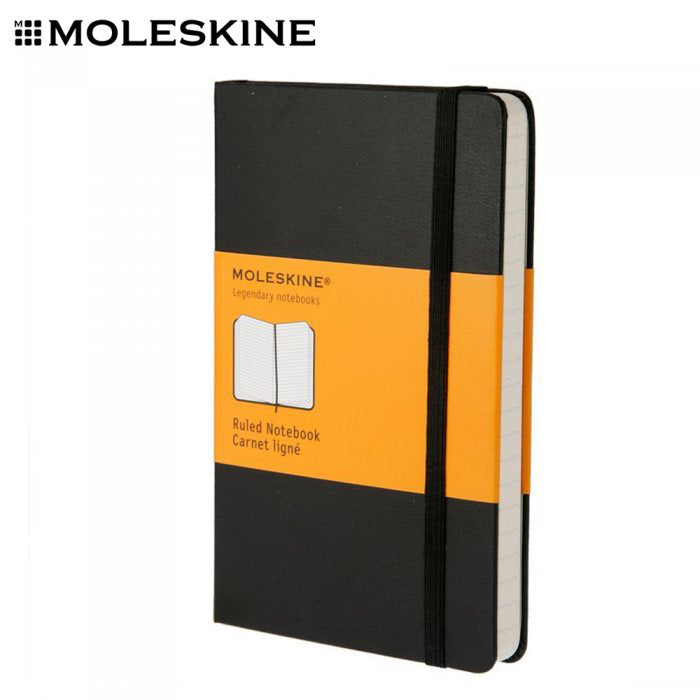
The Moleskine collection provides notebook and writing-set options for a stationery-led brief. The A5 Hardcover Classic Notebook listing, for example, describes an elastic closure, ribbon bookmark and expandable inner pocket. Confirm the actual size, ruling, colour and available finish for your order.
These are different gift directions rather than a ranking of brands. Select the format that fits the recipient, then ask ExecutiveGifts to confirm availability and the permitted customisation for the exact product.
For a writing-focused gift, use our premium pens and writing gifts guide to compare refills, notebook formats, personalisation and set presentation.
For speakers or earbuds, our premium audio-gift buying guide covers recipient fit, device compatibility, branding feasibility and warranty questions.
4. Decide where your company identity belongs
A client gift can carry your identity without making the entire product a promotional surface. Consider three approaches:
- Product branding: a discreet logo or initials, where the model and material support the requested method.
- Packaging branding: a sleeve, box or band, subject to available options and minimum quantities.
- A personal message: a card that connects the gift to the client relationship or milestone.
Ask for a mock-up showing the size, position and colour of any mark. Confirm brand-specific restrictions before assuming a retail-branded item can be engraved, printed or debossed. Where product marking is unavailable, ask whether a separate card or presentation sleeve can achieve the intended result.
For named gifts, approve spelling, titles and the recipient-to-item list before production. A restrained design still needs the same careful proofing as a large logo.
5. Choose between one strong item and a coordinated set
A single well-matched item keeps the decision and presentation clear. A set can work when its contents have a shared purpose, such as a notebook with a suitable pen or a travel accessory with a useful organiser.
Before adding more items, ask whether each one improves the gift. Confirm the exact contents, colour coordination and packaging dimensions. Request a photograph or sample of the proposed arrangement so you can judge the finished presentation, not just the individual product images.
Distinguish original brand packaging from additional gift packaging. Ask what is supplied as standard, what can be customised and how the gift will be protected during delivery.
6. Set a complete budget per recipient
Build the budget around the finished, delivered gift. The product price alone may leave out costs that become significant across a client list.
- The selected product and any additional set contents
- Artwork setup, printing, engraving or individual personalisation
- Gift packaging, cards, inserts and assembly
- Delivery to one location or several recipient addresses
- Applicable GST and any agreed sample charges
Provide a target budget and state what it must include. If you need different recipient tiers, explain the purpose of each tier and request comparable options within each allowance. Confirm quantities and minimum orders for each model or colour rather than assuming the entire programme counts as one order.
7. Check the sample, stock and delivery plan
For a premium gift, small details are easy to notice. Where practical, review a sample for finish, weight, colour, logo placement and packaging fit. Check the exact model code and ask what product documentation and after-sales support apply.
Share the required arrival date, not just the presentation date. Allow for selection, sample review, artwork approval, production, packing and distribution. Stock, available colours and customisation lead time must be confirmed for the chosen order.
For individual deliveries, agree on address collection, packing labels, dispatch instructions and how exceptions will be handled. Keep the final recipient list with the team responsible for fulfilment and supply only the delivery details needed.
Apply the guide to common client-gifting briefs
- Banking and professional services: begin with the recipient’s organisation, approved value limit and meeting or appreciation context; then shortlist suitable desk, writing or everyday-use gifts.
- Property and business partnerships: connect the message and presentation to the milestone while keeping the product useful beyond the occasion.
- Executive visits: prioritise carrying convenience and clear delivery arrangements before the visit.
- Long-standing clients: review what was sent previously and use known preferences to avoid repeating the same item unnecessarily.
Browse premium branded gifts for executives and clients to turn the brief into a shortlist. For a broader introduction to the available categories, see ExecutiveGifts’ corporate gifting overview.
What to include in your quotation request
- Recipient profile and gifting occasion
- Quantity, recipient tiers and any repeat-order needs
- Target budget per recipient, including required services
- Preferred categories, brands, colours or product links
- Logo, initials or message requirements and proposed placement
- Packaging, card and set-assembly preferences
- Required arrival date and delivery locations
- Whether a sample is needed before approval
Example enquiry: “We are preparing 60 client-appreciation gifts for senior business partners. Please compare a Bellroy accessory, a Moleskine writing option and a Stanley drinkware option within [budget] per recipient, including presentation and delivery. We prefer discreet branding or a branded card. Delivery is required by [date] to [location]. Please confirm stock, customisation options and sample arrangements.”
Preparing gifts for banking or financial-institution contacts? See our financial-institution client gifting brief for recipient checks, practical product directions and presentation details.
Frequently asked questions
What makes a corporate gift feel premium?
The fit with the recipient, product finish, usability and presentation all contribute. A familiar brand can support the choice, but it does not replace checking the specific item and finished gift arrangement.
Can our logo be added to Bellroy, Stanley or Moleskine products?
Customisation depends on the exact model, material, available process and brand restrictions. Send the product link and artwork for confirmation. Ask about packaging or a card if direct product branding is not available.
Is one branded item better than a gift set?
Choose one item when it clearly meets the recipient’s needs. Consider a set when the contents work together and the packaging remains practical. Compare the complete presentation and cost before deciding.
What is the minimum quantity for premium client gifts?
Minimum quantities can vary by product and customisation method. Share the quantity per model, colour or recipient tier so ExecutiveGifts can confirm workable options.
How early should we order?
Provide the required arrival date at the enquiry stage. The schedule depends on stock, samples, personalisation, packaging and delivery. Confirm approval milestones before committing to the order.